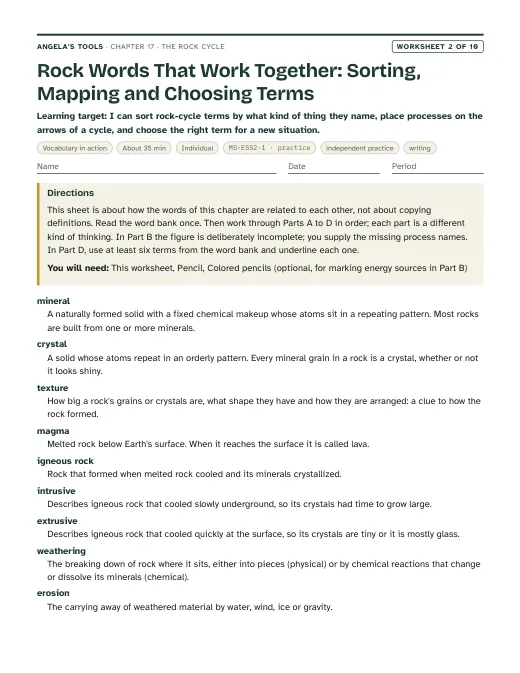
mineralA naturally formed solid with a set chemical makeup whose atoms are packed in a repeating pattern. Most rocks are built from one or more minerals locked together.The pink, white, gray and black specks in granite are four different minerals locked together.
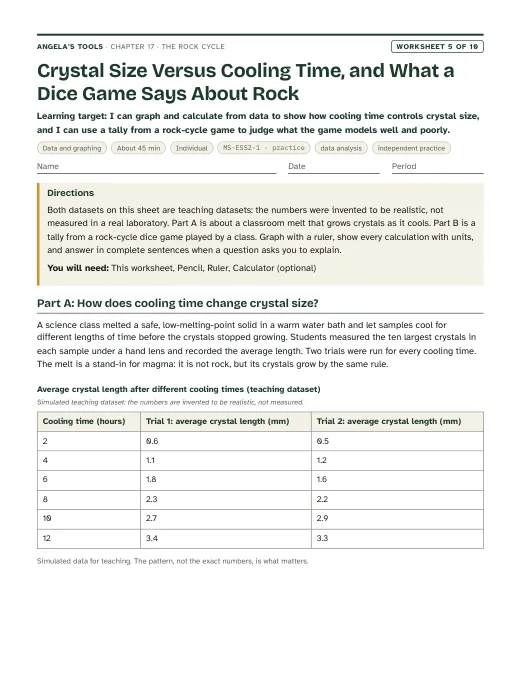
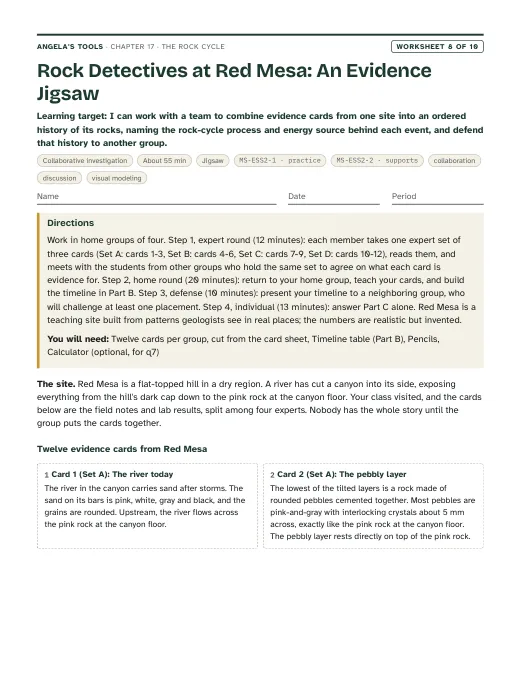
textureHow big a rock's grains or crystals are, what shape they have and how they fit together; this is the main clue to how the rock formed.A coarse texture with interlocking crystals tells a geologist the rock cooled slowly from melted rock.
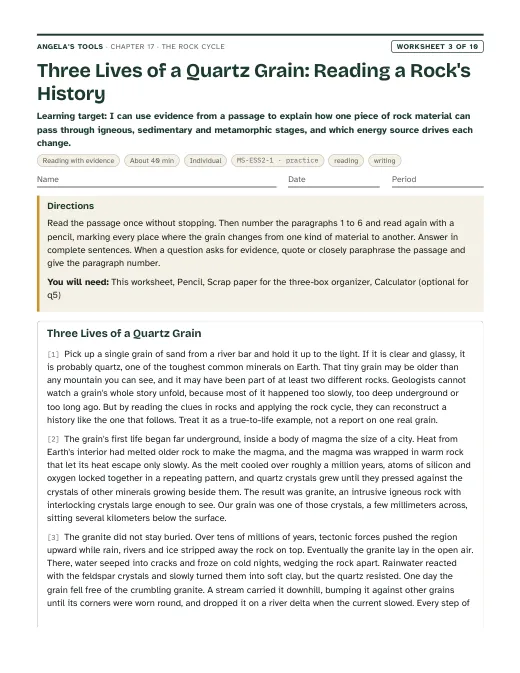
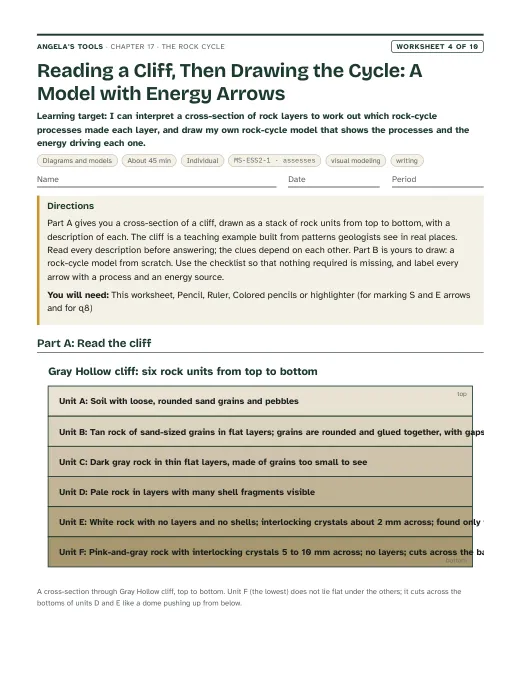
igneous rockRock that forms when melted rock, called magma underground or lava at the surface, cools and hardens.Both the granite of a mountain dome and the dark basalt of a lava flow are igneous rock.
intrusive rockIgneous rock that hardened slowly below the surface, giving its crystals time to grow large enough to see.Because granite is intrusive, finding it at the surface means the rock above it was removed.
extrusive rockIgneous rock that hardened quickly at the surface, so its crystals are tiny or the rock is mostly natural glass.Basalt from a lava flow is extrusive, which is why you need a lens to see its crystals.
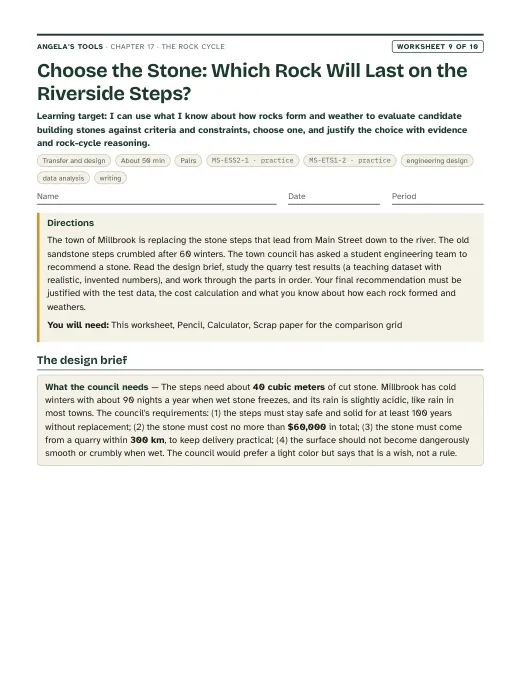
weatheringThe breakdown of rock at Earth's surface, either physically, by cracking into pieces, or chemically, by reactions that change or dissolve its minerals.Years of freezing, thawing and rain are weathering the dome into loose grains.
sedimentLoose pieces of rock, mineral grains or shells that wind, water, ice or gravity can move and later drop.The river slowed as it entered the lake and dropped its sediment in a fan near the mouth.
sedimentary rockRock made from sediment that was deposited, buried, pressed together and cemented by minerals, or from minerals that crystallized out of water.The flat layers in the canyon wall are sedimentary rock built from sand dropped by an ancient river.
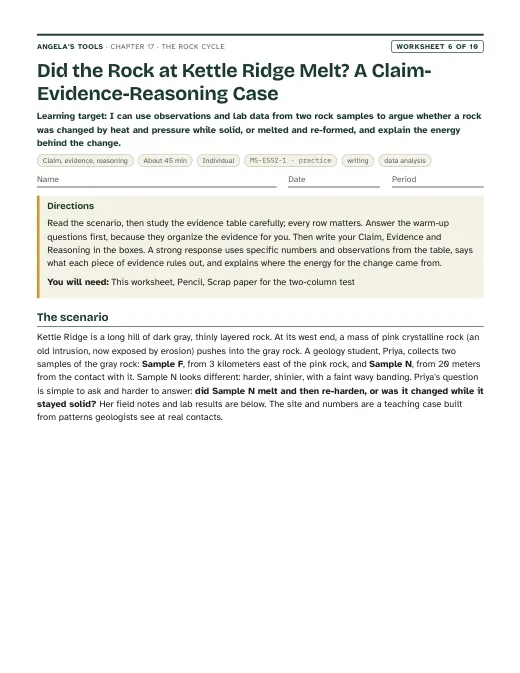
metamorphic rockOlder rock whose texture or mineral makeup was changed by heat, pressure or hot fluids while it stayed solid.Marble is metamorphic rock: it was limestone until heat regrew its crystals.
deformationThe slow bending and squeezing of solid rock by tectonic forces, which flattens its crystals and lines them up, often in bands.Deformation where two plates collide produced the wavy light and dark bands in the gneiss.
recrystallizationThe regrowth of the crystals inside solid rock into new or larger crystals, for example when heat flows in from nearby magma.Recrystallization turned the sand grains of a sandstone into the fused crystals of quartzite.
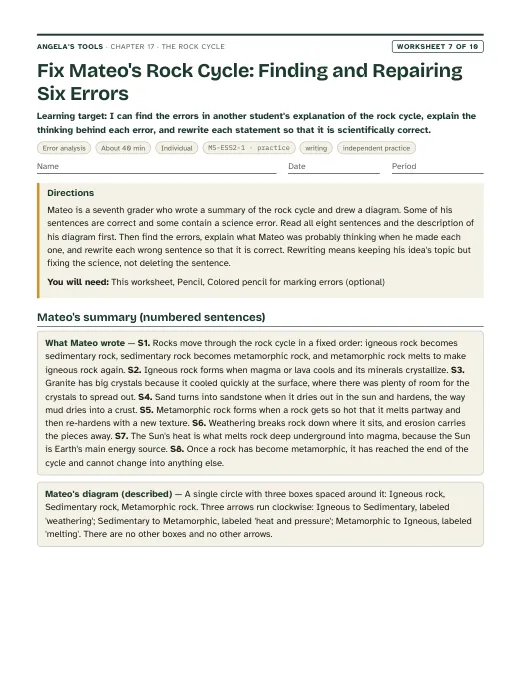
rock cycleA model of the many routes by which rock material is recycled: any rock can be weathered into sediment, changed by heat and pressure, or melted, and then become a new rock.In the rock cycle model there is no required order, so a rock can skip straight from igneous to metamorphic.