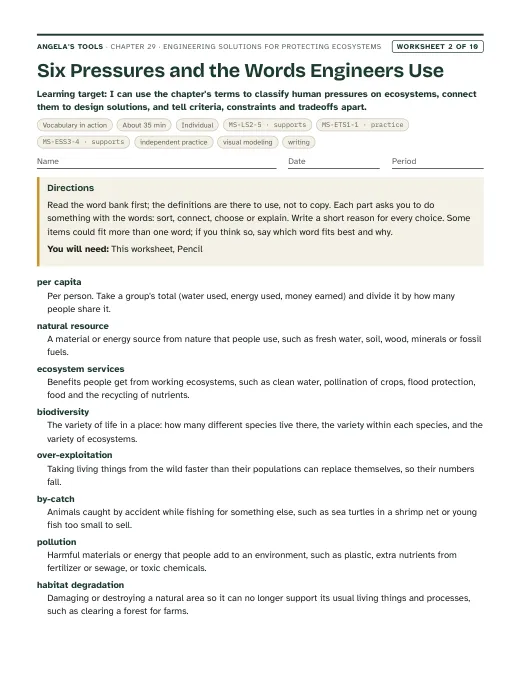
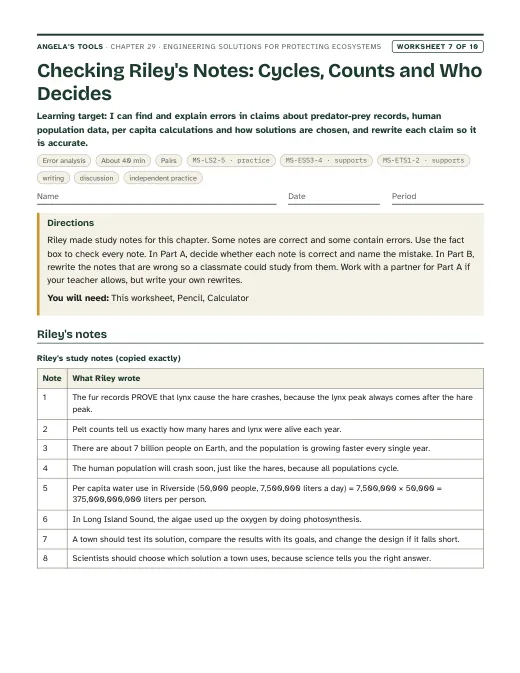
per capitaPer person. A per capita amount is a group's total divided by how many people are in it.The town's total water use rose even though per capita use fell slightly, because many more people moved in.
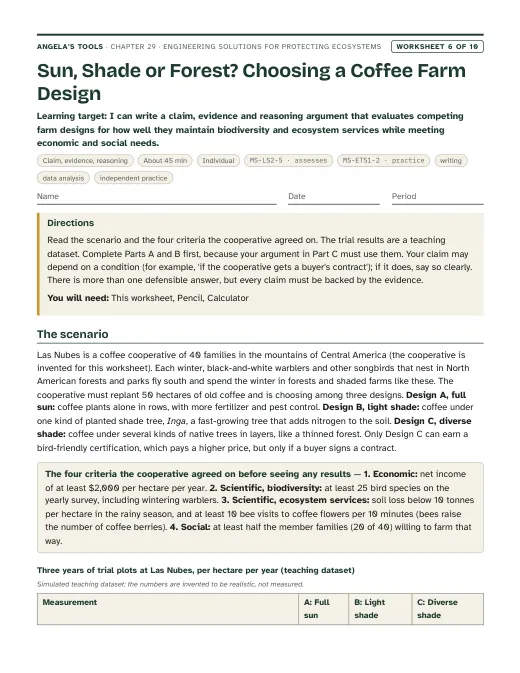
ecosystem servicesThe benefits people get from working ecosystems, such as clean water, fish to eat, pollinated crops, fertile soil and protection from floods.A tidal marsh provides ecosystem services by removing nitrogen from water and soaking up storm surge before it reaches houses.
biodiversityThe variety of life in a place: how many kinds of organisms live there, how many of each there are, and the variety of habitats they use.Coffee farms shaded by tall trees keep far more bird biodiversity than coffee planted in open fields.
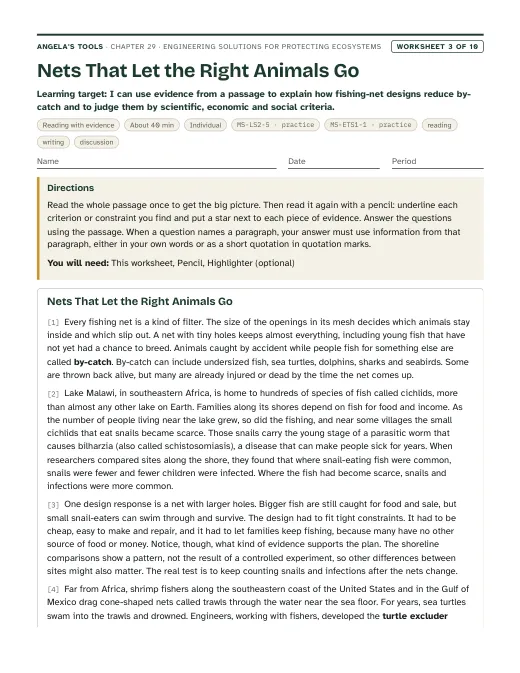
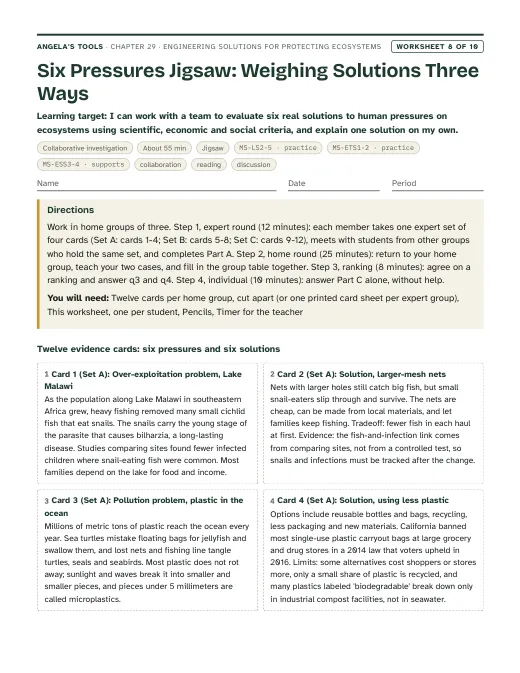
over-exploitationHarvesting a wild species faster than its population can replace the individuals taken, so the population shrinks.Catching small snail-eating fish along with large ones was over-exploitation that let the snails multiply.
by-catchAnimals caught by fishing gear that the fishers were not trying to catch, such as young fish, small species, sea turtles, dolphins or seabirds.The redesigned net cut the by-catch of small fish from most of each haul to a small fraction of it.
habitat degradationDamaging or destroying a natural area so that it can no longer support the living things and natural processes it used to.Clearing tropical forest for full-sun coffee is habitat degradation for the warblers that spend their winters there.
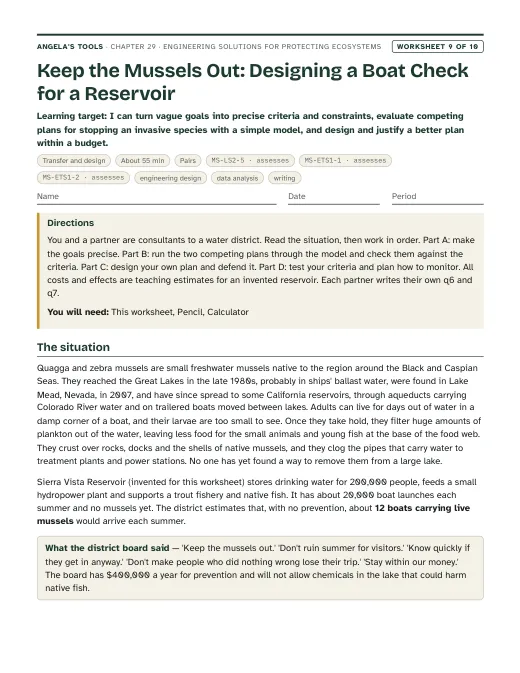
invasive speciesA species that people have moved, on purpose or by accident, to a place where it did not live before, and that harms the ecosystem, the economy or human health there.Silver carp count as an invasive species in the Mississippi basin because they eat the plankton that young native fish need.
emerging diseaseA disease that has newly appeared in people or is quickly spreading to new places, often after people or their animals come into new contact with wild animals that carry it.Nipah virus became an emerging disease in Malaysia when farm pigs picked it up from fruit bats and passed it to farmworkers.
climate changeA long-term shift in Earth's climate, including rising average temperatures, rising seas and changes in how often extreme weather happens. The change since the 1800s is driven mainly by burning fossil fuels.City planners use climate change models to estimate how far high tides may reach by 2050.
criteriaThe things a design must do to count as a success, stated precisely enough to test. The singular is criterion.One criterion for the net was that it keep at least 80 percent of the large fish in every three-haul test.
constraintsThe limits a design must work within, such as cost, materials, time, laws, safety and what the people who use it can manage.A small budget and the need for nets that fishers could repair themselves were the main constraints.
tradeoffGiving up some of one good outcome to get more of another, when no design can have everything.Shade-grown coffee is a tradeoff: fewer beans per hectare in exchange for forest habitat and pollinators.